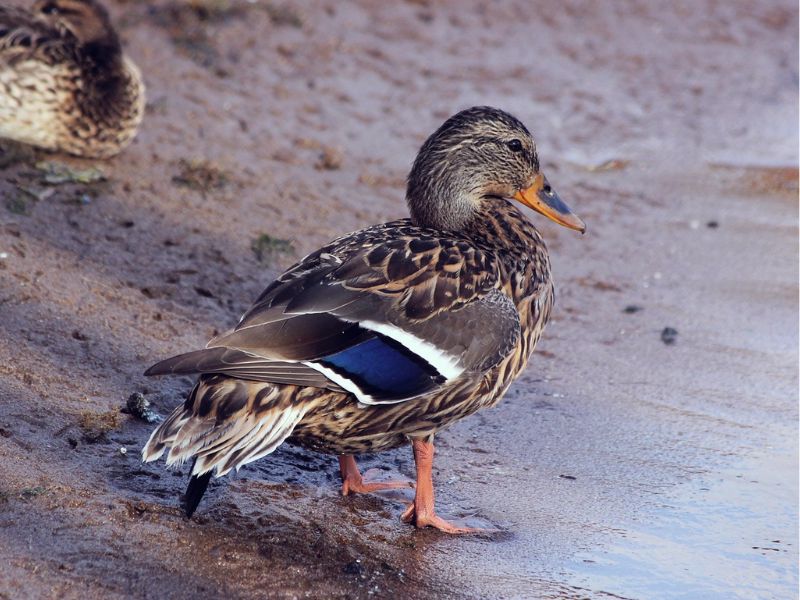
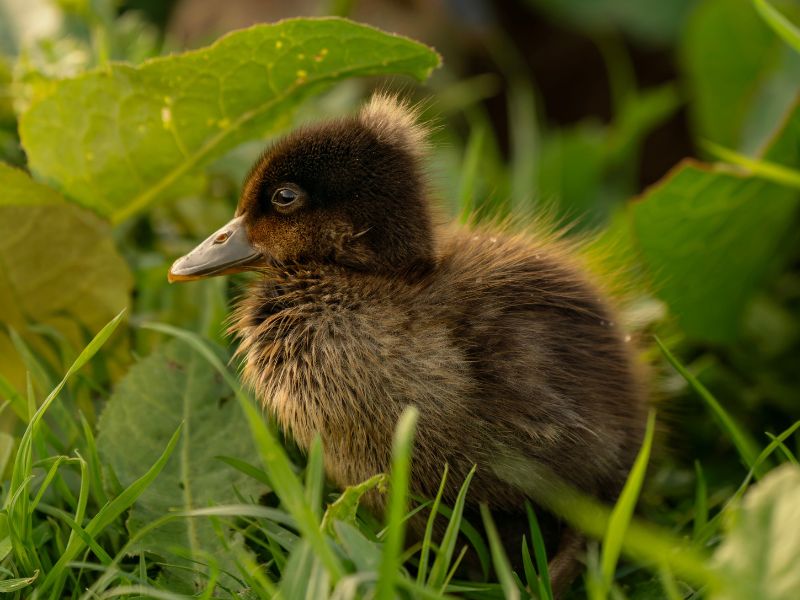
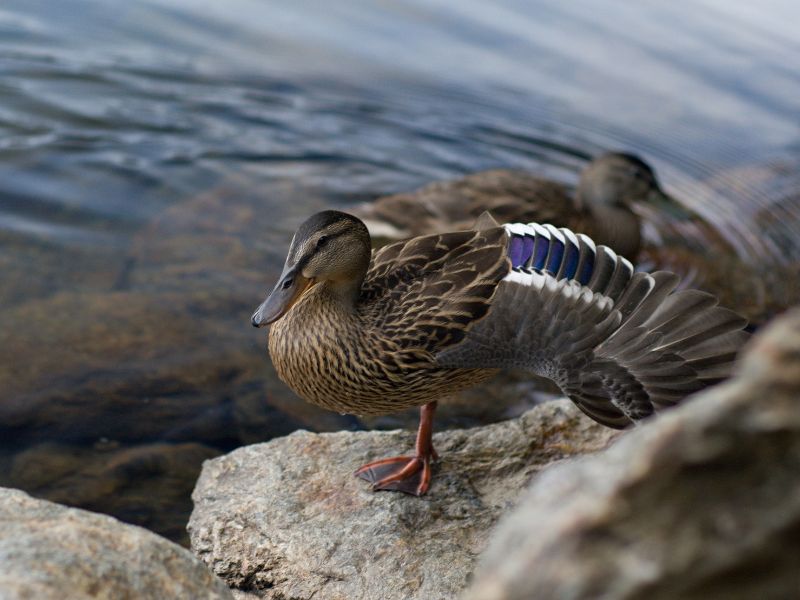
Do mallard ducks mate for life when they appear to swim around together as a perfect pair? Not quite. Mallards are generally seasonally monogamous, meaning a male and female form a pair bond for part of the year rather than staying together permanently. These bonds can be surprisingly strong during the breeding cycle, but they usually end as the female begins incubating her eggs, and the two birds typically find new partners in later seasons.
1. Do mallard ducks mate for life in the wild?
No. Mallards do not normally mate for life. Instead, they form seasonal pair bonds that typically last for around 6 – 8 months. Ducks Unlimited describes Mallards as forming new pair bonds annually, with courtship and mate selection beginning in fall or early winter.
You're reading:: Do Mallard Ducks Mate for Life: 7 Facts About Mallards
This behavior is called seasonal monogamy. During the period when a pair is bonded, the male and female may remain closely associated through courtship, migration, and the early part of nesting.
That can make a Mallard pair look like lifelong partners, especially when you see the same male and female swimming together repeatedly. But their relationship has a much shorter biological timeline.
Once the female progresses into incubation, the pair bond weakens. The male typically leaves while the female takes responsibility for incubating the eggs and raising the ducklings.
So, if you have ever watched a pair of Mallards at a pond and thought, “Those two must be together forever,” you were witnessing a genuine pair bond – but not necessarily a lifelong one.
2. How Mallard pairs form their seasonal bonds
Mallard courtship can begin surprisingly early.
According to Ducks Unlimited, Mallards often begin selecting mates during fall and early winter, well before the spring nesting period. Males compete for access to females, while females choose among potential partners.
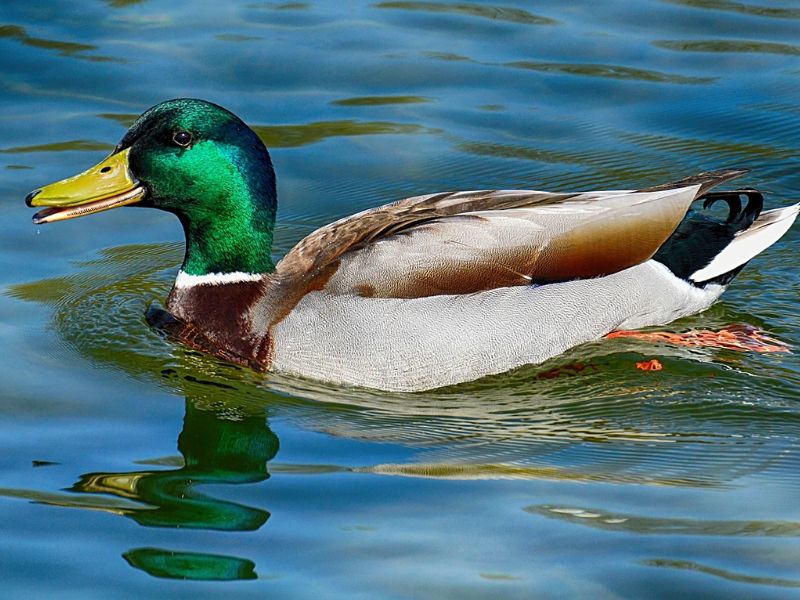
The familiar green-headed male isn’t simply showing off for human observers. His breeding plumage and courtship behavior are important parts of the social process.
Courtship can include:
- Head-bobbing displays
- Swimming alongside a potential mate
- Calls and vocal exchanges
- Body and feather displays
- Synchronized movements
- The male remaining close to the female
Cornell Lab of Ornithology notes that male Mallards also make a distinctive rattling sound by rubbing their bill against their flight feathers. This display is directed toward a mate and is thought to help maintain the pair bond.
Once a pair has formed, the two birds may spend a great deal of time together. The male’s presence can also provide the female with some protection from harassment by other males and help her access feeding areas. Ducks Unlimited describes these benefits as part of the value of early pair formation for female Mallards.
3. Why Mallards don’t stay paired forever
The answer to do mallard duck mate for life becomes clearer when you look at what happens during nesting.
The male’s reproductive role is very different from the female’s.
After mating and once the female begins incubating, she handles the demanding work of keeping the eggs warm. Mallard incubation generally lasts around 26 – 30 days, and the female performs the incubation herself.
The male typically leaves during the incubation period and may seek additional mating opportunities. He does not remain with the female throughout the entire process as a lifelong partner.
This is one of the biggest differences between Mallards and species famous for long-term pair bonds.
The American Bird Conservancy explicitly contrasts Mallards with larger waterfowl such as Tundra Swans, noting that Mallard pairs remain together for only a season.
Their reproductive strategy is therefore flexible rather than built around maintaining one partnership for many years.
4. What happens to the male Mallard after mating?
Once the female is committed to incubation, the male Mallard generally stops being an active partner in raising the brood.
The female handles incubation and, after hatching, leads the ducklings to feeding areas and protects them from danger.
Ducks Unlimited describes Mallard ducklings as precocial: they can walk, swim, and feed themselves shortly after hatching. The mother guides them toward suitable wetlands and provides protection while they are young.
Read more: : Japanese Forest Grass Companion Plants: Perfect Complements for a Tranquil Garden
Meanwhile, males go through their own seasonal changes, including the replacement of their breeding plumage during molt.
This means that seeing a female Mallard swimming around with a group of ducklings and no male nearby is completely normal. The absence of the father does not necessarily mean something has gone wrong.
The female is simply carrying out the normal Mallard parenting pattern.
5. Do Mallard pairs stay together during migration?
They can, particularly while their seasonal pair bond is still intact.
One interesting feature of Mallard behavior is that pair formation begins before the breeding season. Ducks Unlimited notes that pair bonds can remain intact through spring migration and arrival on the breeding grounds.
This makes sense when viewed from the perspective of their annual cycle. The pair forms during fall or winter, spends the colder months together, migrates toward breeding areas, and then begins nesting.
But this partnership is temporary.
As the female progresses through incubation, the bond weakens and the male typically departs. The pair’s apparent “togetherness” during winter and migration should therefore not be interpreted as evidence that Mallards have chosen one partner for their entire lives.
6. Can Mallards find the same mate again?
This is where the story gets a little more interesting.
Mallards generally form new pair bonds each year, so you should not assume that a male and female seen together in one breeding season will automatically reunite the following year. Ducks Unlimited describes the species as forming new pair bonds annually.
That doesn’t mean every individual pair can never encounter each other again. Wild animals move through familiar habitats, and circumstances can vary between individuals and populations.
However, the standard Mallard mating system is not based on maintaining a lifelong partnership.
So, if you are asking “do mallard ducks mate for life” because you’ve seen the same-looking pair together across different seasons, appearance alone isn’t enough to establish that they are the same two birds or that they have maintained a lifelong bond.
7. Are Mallards actually monogamous?
Yes – but the word monogamous needs some context.
Mallards are generally described as seasonally monogamous. During a breeding season, a male and female form a pair bond, but that relationship does not necessarily continue into subsequent breeding seasons.
There is also an important distinction between a social pair and exclusive mating.
A male and female can behave as a bonded pair while other mating interactions occur. The Bird Alliance of Oregon notes that Mallards are often socially monogamous, while females may mate with males other than their social partner.
This makes Mallard reproduction more complicated than simply saying “one male chooses one female and they remain completely exclusive.”
In wildlife, social behavior and reproductive behavior don’t always line up perfectly.
8. What happens when a Mallard pair separates?
The separation usually happens as part of the normal reproductive cycle rather than because the pair has “broken up.”
The female begins incubation, and the male moves away. The female then raises the ducklings without the male’s continued parental involvement.
Mallard ducklings hatch after roughly a month of incubation and leave the nest soon afterward. Ducks Unlimited reports that the female leads them to nearby wetlands where they begin feeding on invertebrates.
Read more: : How Long Does It Take for Plastic to Decompose: 7 Surprising Facts
This arrangement is quite different from birds in which both parents remain together to raise their young.
For Mallards, the mother’s ability to guide and protect the ducklings is central to brood survival, while the male’s reproductive investment is concentrated earlier in the breeding cycle.
9. Do Mallards show affection toward their mates?
It is tempting to describe a Mallard pair’s behavior using human ideas about romance or affection, but scientists generally use more precise terms such as pair bonding, courtship, mate choice, and reproductive behavior.
A bonded pair may swim together, remain close while feeding, and perform coordinated displays. These behaviors clearly demonstrate an association between the birds during the breeding cycle. Cornell’s documentation of Mallard courtship and pair-bond displays provides a good example of how researchers describe these interactions without assuming human-like emotions.
So, yes, Mallard pairs can look remarkably close. But that does not mean we should automatically interpret their behavior as human-style lifelong romantic attachment.
Their bond has a clear biological purpose connected to reproduction and seasonal survival.
10. Which ducks actually form longer-lasting pair bonds?
Mallards are not the best example if you’re looking for a waterfowl species associated with lifelong pairing.
Some other waterfowl species are known for stronger long-term pair relationships. Swans, for example, are widely associated with long-lasting pair bonds. The American Bird Conservancy specifically contrasts Mallards’ seasonal pairing with the longer-term relationships seen in Tundra Swans.
Even here, however, “mates for life” should not be treated as an absolute rule for every individual bird. Pair bonds in wild animals can change because of death, breeding failure, migration, or other ecological circumstances.
The key difference is that Mallards are characteristically seasonal pair-bonders, while some other waterfowl are more strongly associated with multi-year or lifelong partnerships.
11. Why Mallard mating behavior is so interesting
The answer to do mallard duck mate for life may initially seem like a simple “no,” but their reproductive system reveals a much more interesting story.
Mallards form their pair bonds months before nesting. The male and female may remain together through winter and migration, and the male can provide protection and vigilance during this period. Then, once the female begins incubation, their partnership changes dramatically.
The female takes over incubation and brood-rearing, while the male moves away.
This annual cycle allows Mallards to maintain a flexible mating system rather than investing in a permanent pair relationship. It is one reason the species can be so successful across a remarkably broad range of wetlands and other habitats.
12. Frequently asked questions about Mallard mating
Do Mallard ducks stay together after mating?
They can remain together for part of the breeding cycle, but the pair bond generally weakens once the female begins incubation. The male typically leaves while the female incubates the eggs and raises the ducklings.
How long do Mallard pairs stay together?
Mallard pair bonds typically last around 6 – 8 months, beginning with pair formation in fall or early winter and continuing through much of the breeding cycle.
Do Mallards have the same mate every year?
Usually, no. Mallards generally form new pair bonds annually. A pair seen together in one season should not automatically be assumed to remain together in later years.
Does the male Mallard raise the ducklings?
Generally, no. The female handles incubation and brood-rearing, while the male typically leaves during incubation.
Do Mallards mate with other ducks?
Yes, Mallards can hybridize with other closely related duck species. Their reproductive behavior can also involve mating outside the social pair bond.
Why do male and female Mallards stay together for so long?
Their seasonal pair bond provides benefits during the period leading up to breeding. The male can remain near the female, provide vigilance, and help deter harassment from other males while the pair prepares for nesting.
So, do mallard ducks mate for life? Generally, no. Mallards form seasonal pair bonds that can last for several months, often beginning in fall or early winter and continuing into the breeding season. Once the female starts incubating, the male usually leaves, and the female raises the ducklings herself. Their behavior may look like lifelong devotion when viewed from a park bench, but the biology tells a different story: Mallards are built around seasonal partnerships, flexible mate selection, and a breeding cycle that renews from year to year.
You may consider:
Source: https://magnetmix.com
Category: Discovery